My main priority when I’m taking baby outside is to enjoy the peace of mind that baby is warm, dry, and comfortable. I use a 5-part layering system (that is very similar to what I wear) when we are spending time outside and in the changing elements. I use this system on hikes, walks around our neighborhood, and even when we’re camping.
When we’re outside, I’m constantly checking behind baby’s neck to make sure her core temperature isn’t dropping too quickly. If she starts to get too cold, I will add a layer from the list. The same goes for when she’s too warm. We just remove another layer!
A layering system is much easier than depending on a single gear item to match the conditions perfectly.
***Note: This page contains some affiliate links, which means that I may earn a commission if you buy through my link at no additional cost to you. I strive to recommend only things I use myself, or similar items.***
How to Build a Layering System
If you aren’t sure where to start with layering, a good rule of thumb is to put one more layer on baby than you are wearing yourself. This means, if you’re in a t-shirt, put baby in long sleeves and a mid-layer. If you have a sweatshirt, go up to a mid-layer and the puffy bunting. Buntings that are the next size up make layering much easier.
Sun protection is also crucial in the infant stage. The American Academy of Pediatrics recommends that babies less than 6 months of age DO NOT wear sunscreen. That means we should be using long sleeves and wide-brimmed hats to help protect their delicate skin from the damaging effects of UV rays.
Here is my layering system for all seasons of baby’s first year of life – no matter when you want to go enjoy some time outside!
(Note: I use an Ergo Baby baby carrier for all our outdoor adventures and would buy it again and again!)
Layer 1: Base layer
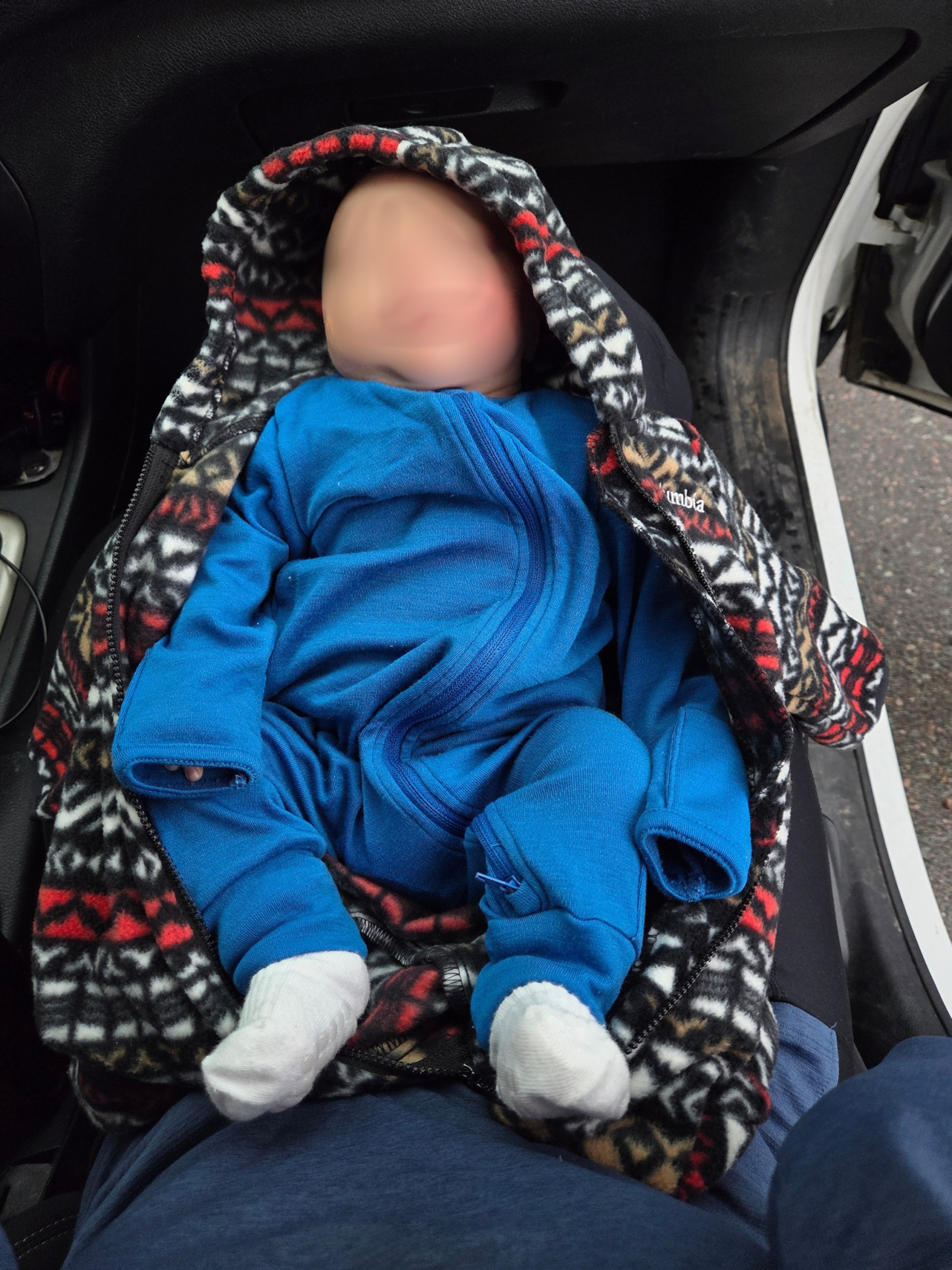
I wear wool base layers myself, so I use wool for my baby’s layering system as well. You could choose polyester (which is often cheaper), and REI has some good options, but I prefer the wool. Wool layers are great to wear year-round. They are warm in the winter, and stay warm if they get a little wet (which is bound to happen with a drooly baby). Plus, they breathe well and help keep baby comfortable in the summer.
Quality wool layers are durable, and you should only need 1 set at a given size — two, tops, if you’re layering them. If you do purchase 2 sets for layering, I recommend getting 2 different sizes. It makes layering a little easier, and you’ll be ready with the next size as baby starts to grow.
I’ve found two different brands for baby wool base layers that I LOVE: Iksplor and Wildhaven Wools.
Iksplor is based out of Jackson Hole, WY. I used their base layers when my baby fit in the 0-6 mo sizes. I had both the Merino Wool Adventure Zippy and the long sleeve shirt and pants. When my baby was 6 months old, she still fit in the 0-3 mo zippy, but the pants squeezed her belly a little more than I liked (I think they’ve recently updated this design), so we stopped wearing the 2-piece option sooner.
Iksplor is also great because they have a website dedicated to their pre-loved gear. I’ve purchased all of my Iksplor gear from this website.
At 6 months, I decided I didn’t want to buy new wool base layers for each 3 month size range, so I looked for options that “grow” with the baby.
That’s when I found Wildhaven Wools, based out of Haines, AK. I love, love, love that this is an Alaska brand (I spent time growing up and working there, and I love to support local business in the state when I can). They have a base layer set that fits from 6 – 18 months that I am a huge fan of. This is what we will be using all winter season, and into next summer.
Layer 2: Mid-weight Layer
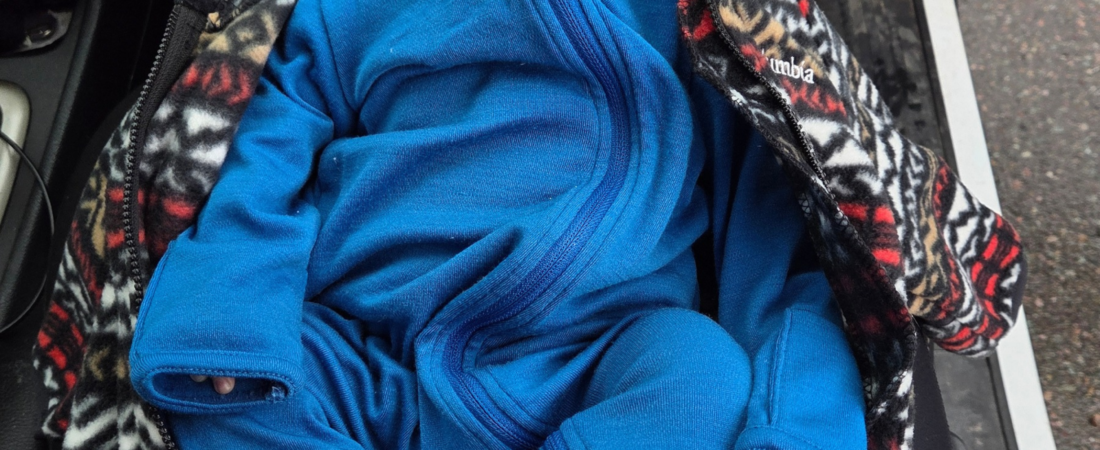
The type of mid-layer can vary depending on the season, but most of the time I stuck to a 1-piece zippered fleece bunting. On the cooler days of spring and fall, this was the warmest layer we used. It was also great to throw on for our chilly summer evenings.
I used the Columbia fleece bunting sized 0-3 months, and kept using it even after her legs were a little too long. Some nice, warm socks that reached up past her knees helped keep her legs warm when we were between sizes.
When she grew out of the Columbia layer, I got the REI Trailmade Bunting in the 6-12 month size. Note, this thing is HUGE. The arms and legs are so long, and some people will get the size smaller for their 6 month old. I kept this larger size, and just rolled everything up.
If the day was warmer and I still wanted baby in an extra layer, I would use a fleece sweatshirt (this one is wool, but I usually used one we purchased from Once Upon a Child).
Layer 3: Puffy Layer
When we finally started to get some really chilly days (40 degrees and below), and even on our overnight trip to Glacier NP this summer, I added a puffy layer over the fleece layer. The beauty of a layering system is that you can add and subtract layers depending on the weather.
We used the North Face ThermoBall One-Piece Snow Suit in the 3-6 month size. I liked this layer, and it was pretty warm, but I felt it was a little tight in the arms when I had the fleece under it. I would almost recommend sizing up again for layering.
Now that she’s outgrown this puffy layer, I am looking at the REI 650 Down Bunting in the 6-12 month size. This should be great in our cooler weather, and will layer nicely during our upcoming winter adventures. I’ll update this post when we decide which layer to use and how we like it.
Layer 4: Outer Layer
When I think about outer layers, I am thinking water and wind-proof. This layer can go over any of the others, depending on the temperature, and it can help hold in a little more body heat.
My husband happens to be a few sizes larger than I am, so I used his rain coat around myself and baby in the chest carrier if we were on walks in the rain. When she was really little, we would try to time our walks and hikes to align with the driest parts of the day.
When this isn’t possible, I have the Helly Hansen Bergen 2.0 PU Rain Set in the 1 YR size that I bought on sale. It’s big on baby right now, but she isn’t trying to walk or crawl around in it yet. She’s basically wearing a big, waterproof tent to help keep her warm and dry for as long as possible.
This is also the last layer I put her in when there is snow or very cold weather, as the water/windproof fabric helps hold a little extra body heat close to baby.
Layer 5: Head, Hands, and Feet (and Blankets)
When baby is small, and the weather is mild, many of the middle layers in the layering system above have flaps that cover baby’s hands and feet. This is great while they fit, but eventually your baby’s feet will be pushing through the bottom of their fleece and you will want something to cover that exposed skin. Here is what I use and recommend for all the in-between spots on baby.
Head
Starting top down, hats are very important whenever you go outside (and if you ask my mother, even when babies are inside). Wide brimmed hats offer protection from the sun (I liked these ones).
As the weather gets colder, you’ll want a hat that is warmer. Most of a baby’s body heat escapes through their head, so this is the first thing to add when the temperature starts to drop (yes, even in the summer). I love the ones with ears!
Hands
Again, for most of the year (especially while baby is small), you should get away with using the flaps on baby’s base layers and buntings to keep hands covered and warm. Eventually, when the temps really drop and baby gets bigger, you will want to look for something warmer.
I got Reima’s Tepas – Baby and Toddler ReimaTec Waterproof Mittens. I liked that these are wool-lined, have a zipper so they are easy to put on, and they are waterproof. With the 6-18 month size, we have a lot of room for growing.
Feet
As baby grows out of the ‘foot flaps,’ you will need to find something to cover her feet and ankles. In the summer, I used a generic brand of cotton socks. (Why do they give infants grippy socks? I don’t know.)
In the cooler weather, I have shifted to wool socks for baby as well. I chose the Reima Parit – Kids’ Socks that I got in a 2 pack. The smallest size for these is 3.5-5.5 (toddler shoe sizes). Right now, that means the heel of the sock goes up past my baby’s knees and the tops go up her thighs, but that just means an extra layer of warmth. I make sure to put these on after her base layer and before the fleece, meaning there are no gaps of skin exposed to the chilly air.
For the winter months (and freezing weather), I have the Reima Anturoin – Baby ReimaTec Wool-Lined Booties in the 6-18 month size. I stressed about fit, wool vs fleece lining, and waterproofing before selecting this more expensive option. They are large on baby’s feet right now, but when she does start to toddle, I’ll be more comfortable letting her try the snow with these on her feet.
I also considered the Puffer Booties from Stonz, but shipping was cheaper if I purchased as many items as possible from one brand (which is why our outdoor wardrobe is so Reima-heavy). Otherwise, I might have wound up with these.
Blanket
When you have baby in the car seat, stroller or pulled behind in the sled, you can help keep her extra warm by tucking in a warm blanket. Cotton gets cold when it is wet (think drool, rain, and snow). Down is great for outdoor gear, and so is wool.
I have a Rumpl blanket, and use mine to tuck around baby when she is in the jogger stroller on my fall runs. We will continue to use it when we go cross-country skiing this winter and I convert the stroller to a sled.
We also use a thick, wool blanket (like this one). This blanket is not cheap (ours was gifted), but we will continue to use it as baby gets older. Right now, it makes a great rug outside, and it is very warm when we wrap up in it.
Final Thoughts
Remember, baby shouldn’t be wearing bulky layers while traveling in their car-seat. You can have them in their base layers for traveling in the car (with a blanket if you’re worried about temperature) and put on the rest of the layers when you get to the trailhead or park. (Check out my recent trips and activity posts for ideas on where to take baby next.)
Always trust your gut when you’re taking baby outside. If you’re not comfortable for any reason, it’s ok to go back inside! That isn’t a failure, and there will be another time to try.
Shop for sales when you can. Keep an eye out at the end of each season for things you can use the next season or even next year. Don’t be afraid to purchase things that might be a little big. The best thing about this 5-part layering system is that you can mix and match layers to fit any weather you might encounter with baby!
What goes into your baby’s layering system? Did I miss anything you find essential? Let me know in the comments below!
Leave a Reply