
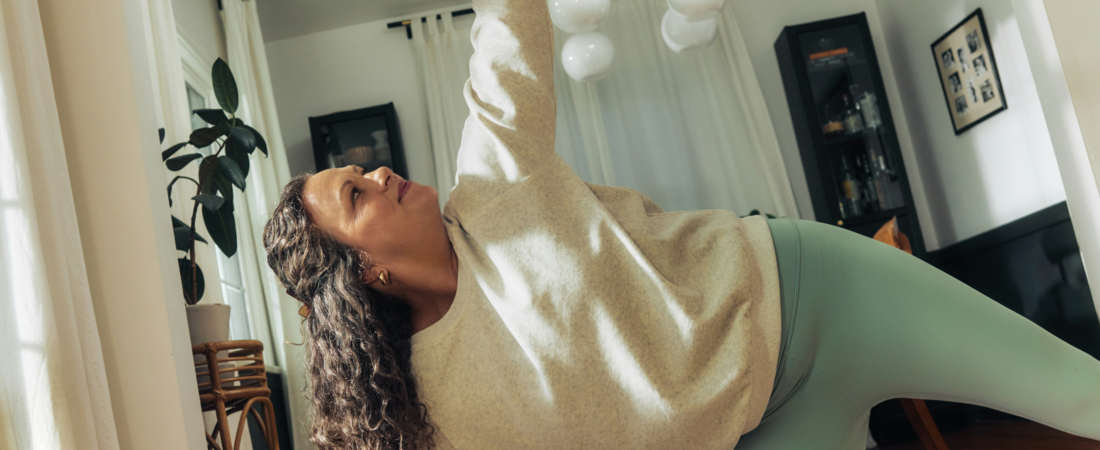
I am not a doctor or a physical therapist. I am a runner, now a first time mom, who wants to get back to the sport that I love. I want to help you return to exercise as well.
The information on the internet can be confusing and contradictory. The fuzzy guidelines can be frustrating, especially if you were active before you gave birth.
So many guides promising a ‘postpartum exercise program’ fail to provide actual timelines, benchmarks, and exercises. I hope you find this one full of practical recommendations that you can use starting today.
This guide contains everything I have learned as a new mom trying to return to exercise.
Listen to your doctor
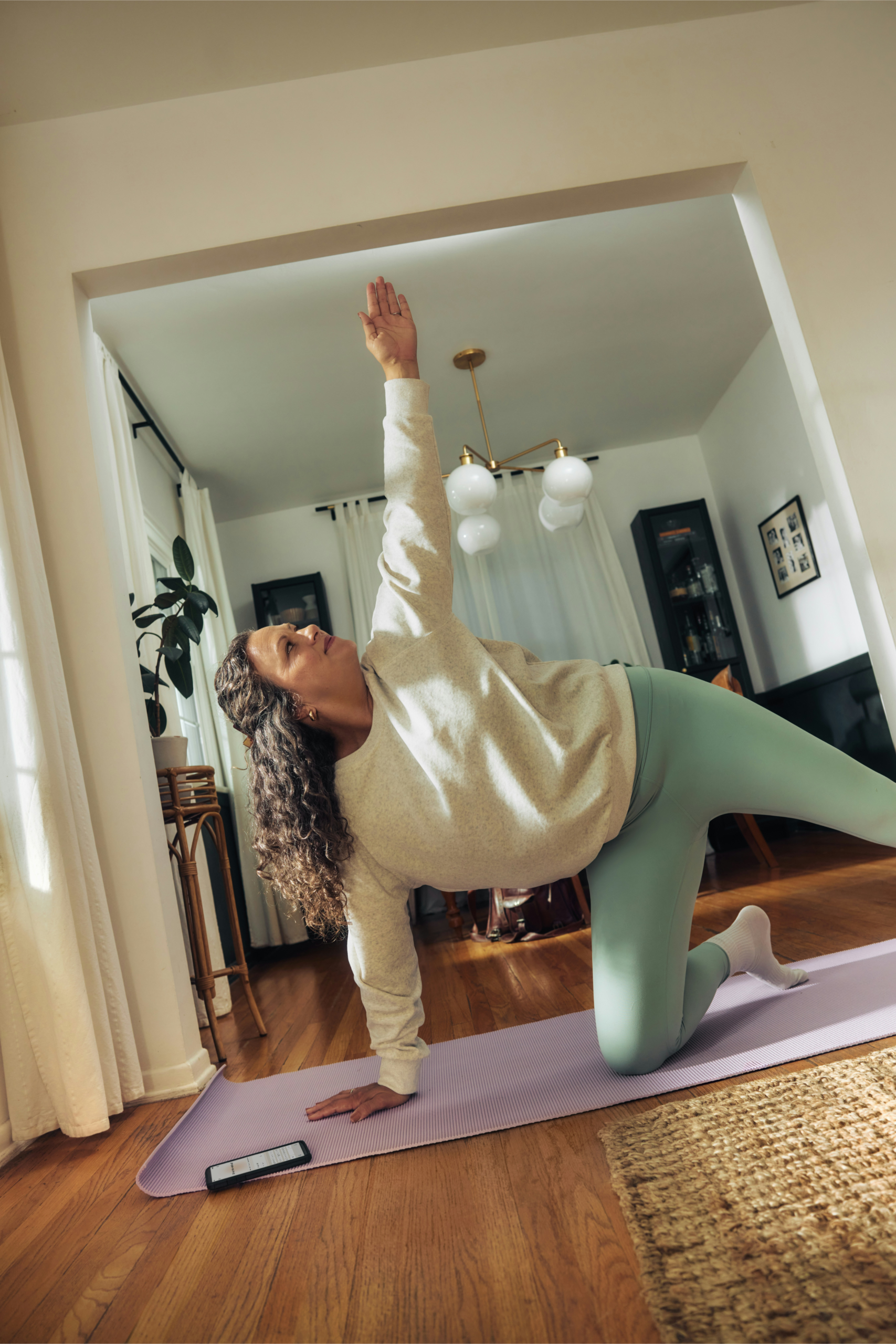
First and foremost, do what your doctor tells you to. I am not a medical professional. If your doctor orders bedrest or limited activity, this is not the guide for you.
Only begin your return to exercise when you have the ok from your OB or midwife. They’re the expert.
Note, the “6-week clearance” does not mean you can go out and run a 10k, or even return to your pre-birth levels of exercise.
This clearance simply means you can get back to the activity levels that are required for daily tasks. You will need to train your body to get back to pre-pregnancy levels of exercise.
If you had a c-section or complications in your birth, you should work closely with your care team to come up with an exercise plan that works best for you.
Signs it’s too early to return to exercise
Next, listen to your body. If you are experiencing pain, excessive fatigue or increased bleeding, those are signs to stop or slow down. If you push too hard too soon, you could set yourself back.
For uncomplicated vaginal births, you’ll want to keep an eye out for signs that your pelvic floor is not taking well to your new exercise program.
Warning signs of pelvic floor disfunction include:
- Worsening bleeding
- Uterine or abdominal pain
- Increased lochia
- “Heaviness” in your vaginal area
- Urinary or fecal incontinence
If you experience any of these, work with a doctor or physical therapist to determine the best plan for you.
Exercise is important, no matter how little
Movement is a huge mood booster. A little bit of exercise has been shown to reduce symptoms of both anxiety and depression.
By adding some more strength and mobility into your exercise routine, you will feel better and you will be more equipped to keep up with growing kiddos.
As your baby gets heavier, you can gain strength to lift them. As they learn to run around, you’ll be able to run after them.
The important thing to note is that you don’t have to train like an olympian to reap the benefits of exercise.
Experts suggest 30 minutes a day, 3 times a week is enough to improve mood and fitness. That means you’re looking to carve out an hour and a half each week.
Finding time to exercise in the newborn stage
As a new parent, finding 90 minutes to exercise each week can feel daunting. You also have to shower, sleep, eat, and perform other household tasks in your limited time between taking care of a baby.
It seems everyone’s advice is to “sleep while the baby sleeps” but also clean the house, feed yourself, and do something fun during this time as well.
On top of this, baby sleep is unpredictable. Sometimes, they go down for two hours. Other times, they’re barely down for 15 minutes before they’re crying for you again.
It’s ok if you can’t find a 45 minute chunk of time to exercise like you used to.
Try to break up your exercise blocks into smaller chunks (10-15 minutes) so they are actually attainable.
Do a block of stretching and mobility, a block of strength, and a block of cardio. Spread these out throughout the day, or even over a few days.
- FOR AN EXAMPLE OF A WORKOUT THAT CAN FIT INTO NAPTIME, SEE MY MOBILITY ROUTINE HERE
The Best Exercises for Postpartum Recovery
The best recommendations I found were from the Oxford University Hospitals NHS Foundation Trust. They have a great week-by-week breakdown of suggested exercises and activities, They recommend waiting to pass the “return to running checklist” before starting a couch to 5k running plan.
For postpartum pelvic floor and core exercises, I like to follow Lauren Fitter’s YouTube playlists.
Your Week-by-Week Postpartum Exercise Timeline
0-2 weeks after birth:
- Pelvic floor muscle exercises – focus on diaphragmatic breathing
- Basic core exercises
- Walking – increase the distance and speed as your body feels more comfortable
2-4 weeks after birth:
- Progress your pelvic floor muscle exercises
- Progress your core exercises
- Introduce body weight exercises (such as squats, lunges, bridging etc.) or start some gentle Pilates exercises
4-6 weeks after birth:
- Continue to progress your exercise duration and intensity from previous weeks
- Introduce low-impact exercises, such as the static bike and/or cross trainer
6-8 weeks after birth:
- Increase the speed and intensity of walking
- Increase the duration and intensity of your low-impact cross-training exercise
- Slowly add resistance into your body weight exercises
8-12 weeks after birth:
- It can be safe to introduce swimming if open wounds have healed appropriately and you are no longer bleeding
- You may start more intense static cycling, such as spinning, if you feel comfortable sitting on a bike seat
12+ weeks after birth:
- Start a couch to 5k plan to get back to running
- Graded return to other high impact exercise
The Postpartum Return to Running Checklist
Before returning to high impact activities, such as running, you should be able to complete the following checklist:
- Walk for 30 minutes
- Balance on one leg for 10+ seconds on each side
- Single leg squat 10x on each leg
- Jog in place for 1 minute
- Do 10 forward bounds
- Hop on 1 leg 10x on each leg
- Do a ‘running man’ exercise 10x on each leg
If you experience pain, vaginal heaviness, or incontinence, that is a sign that your body is not ready to cope with the demands of high impact activity and you should wait to return to that exercise.
Equipment to return to exercise postpartum
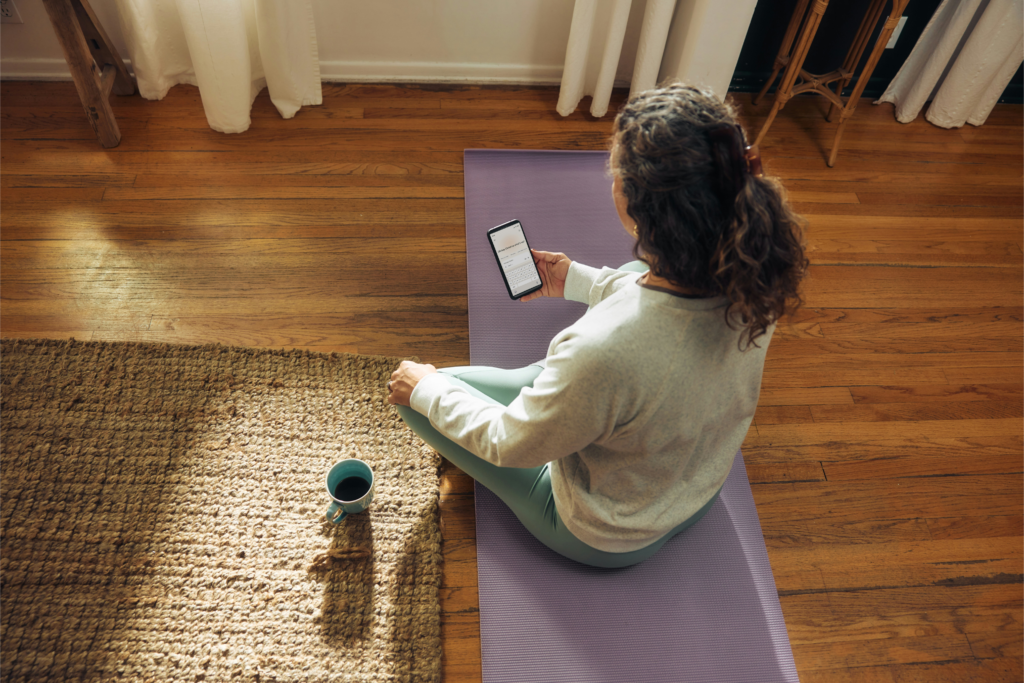
Exercising postpartum does not require equipment, but there are a few things you can get to make it easier and more fun.
These include:
- Yoga mat – I like to roll out my mat for stretching and core workouts.
- Resistance bands – The loops are great for squats, lunges and more. They add difficulty to your exercises without requiring huge weight benches or gym memberships.
- New shoes – Your shoe size probably changed through pregnancy. You should get fitted for new shoes after you give birth.
- Supportive bra – Especially if you are breastfeeding, and your bra size likely changed through pregnancy. A supportive bra will help make your exercises more comfortable.
Can I workout while breastfeeding?
You can absolutely exercise while breastfeeding, and there is evidence that it does not impact your milk supply.
The important thing is to stay hydrated and drink when you are thirsty. It is also important to nourish your body while breastfeeding. Most experts recommend 300-500 extra calories a day.
To make exercise more comfortable, you can try to pump or feed baby just before you exercise. This will lighten your breasts and reduce discomfort associated with tightness.
This season is a great time to invest in a new sports bra. With larger breasts, you will require more support. Be sure to choose a bra that is actually supportive, not just compressing your breasts.
Too much compression can lead to clogged milk ducts and decreased supply. To help avoid this, remove your sports bra as soon as you are finished exercising and return to your usual nursing bra.
Nutrition concerns for returning to exercise postpartum
Healing postpartum puts a huge energy demand on our bodies, and our caloric needs increase with breastfeeding.
We also need to make sure we are getting enough calcium and vitamin D to help with bone density.
It is recommended that lactating mothers meet the following daily guidelines:
- Adequate energy availability (including 300-500 kcal for lactation)
- 1000 mg calcium per day (from yogurt, cheese, some vegetables, or a supplement)
- Vitamin D (goal >50 mg/mL)
- Hydration to thirst
How to love your postpartum body
If you were very active before you gave birth, your body is probably softer in some areas than it was before you got pregnant.
That is normal and ok.
You aren’t broken if you aren’t losing weight postpartum.
If you are trying to return to exercise for weight loss post-birth, that is perfectly acceptable. However, you should keep in mind that this process is going to look different for everyone, and if you’re breastfeeding you might actually continue to gain weight.
If you’re breastfeeding, your boobs might feel gigantic and heavy some days and manageable on others.
If you’re tired and don’t feel like exercising because baby was awake for 3 hours last night, that’s ok, too.
The important thing is to recognize that this is a season for rest and healing. You may have to shift your goals and expectations as you adjust to caring for an infant (I know I did).
You are amazing because you spent the last 9 months building a whole human, and now you’re keeping them alive. That’s badass!
Celebrate your new mama body, and remember this postpartum season doesn’t last forever.
Soon, you’ll be back to all the activities you love, and you can share them with your little baby!
Frequently Asked Questions
How soon can I start walking after giving birth?
Listen to your doctor. Some women (with uncomplicated, vaginal births) are ready to start walking the same week they give birth! After your doctor says it’s ok, start small with a walk around the block and see how your body reacts.
Does exercise affect breast milk supply?
Nope! The important thing is to stay hydrated and continue to on-demand feed or maintain your pumping schedule.
What are the best pelvic floor exercises besides Kegels?
Almost all core exercises will activate your pelvic floor as well. Try deep squats, a glute bridge with knee taps, or clamshells.
Can I do core exercises with Diastasis Recti?
Yes, but you have to choose the right ones. Diastasis Recti is the natural separation of the abdominal muscles during pregnancy. While traditional crunches or planks can worsen the gap by putting too much outward pressure on the belly, deep core stabilization exercises (like diaphragmatic breathing and transverse abdominis activation) are excellent for healing these muscles.
How are you transitioning back into exercise after giving birth?
I know adjusting to an infant makes finding time for yourself a massive puzzle (it certainly did for me!). What does your transition back to movement look like right now, and what sport are you most excited to get back to? Let me know in the comments below!
Leave a Reply